Monday, June 20, 2016

Serbia/Bulgaria m.1915 combat helmet


Unintended consequences


It's June 28, 1914 and 19-year-old Serbian Gavrilo Princip made history.  And how.

By killing one of Europe's most insignificant monarchs, Princip plunged the world into a war that cost  thirty-eight million casualties including 25% of the Serbian army.

I bet he didn't see that one coming.

The Serb forces were depleted after the Balkan wars and were sorely under-manned and under-equipped at the outset of the Great War.  Overwhelmed by the Bulgarians, Serb forces were nearly devoured and had to flee into neighboring Albania.

Enormous amounts of Serbian military materiel were captured by the Bulgarians, including French-made Serbian m.1915 helmets.  Those helmets would embark on a long journey which would see them converted into Bulgarian air-defense helmets during World War Two and , eventually, to my helmet gallery.


What keeps this from being a typical French-produced m.1915 Adrian helmet is the addition of the additional split pins and rivets.


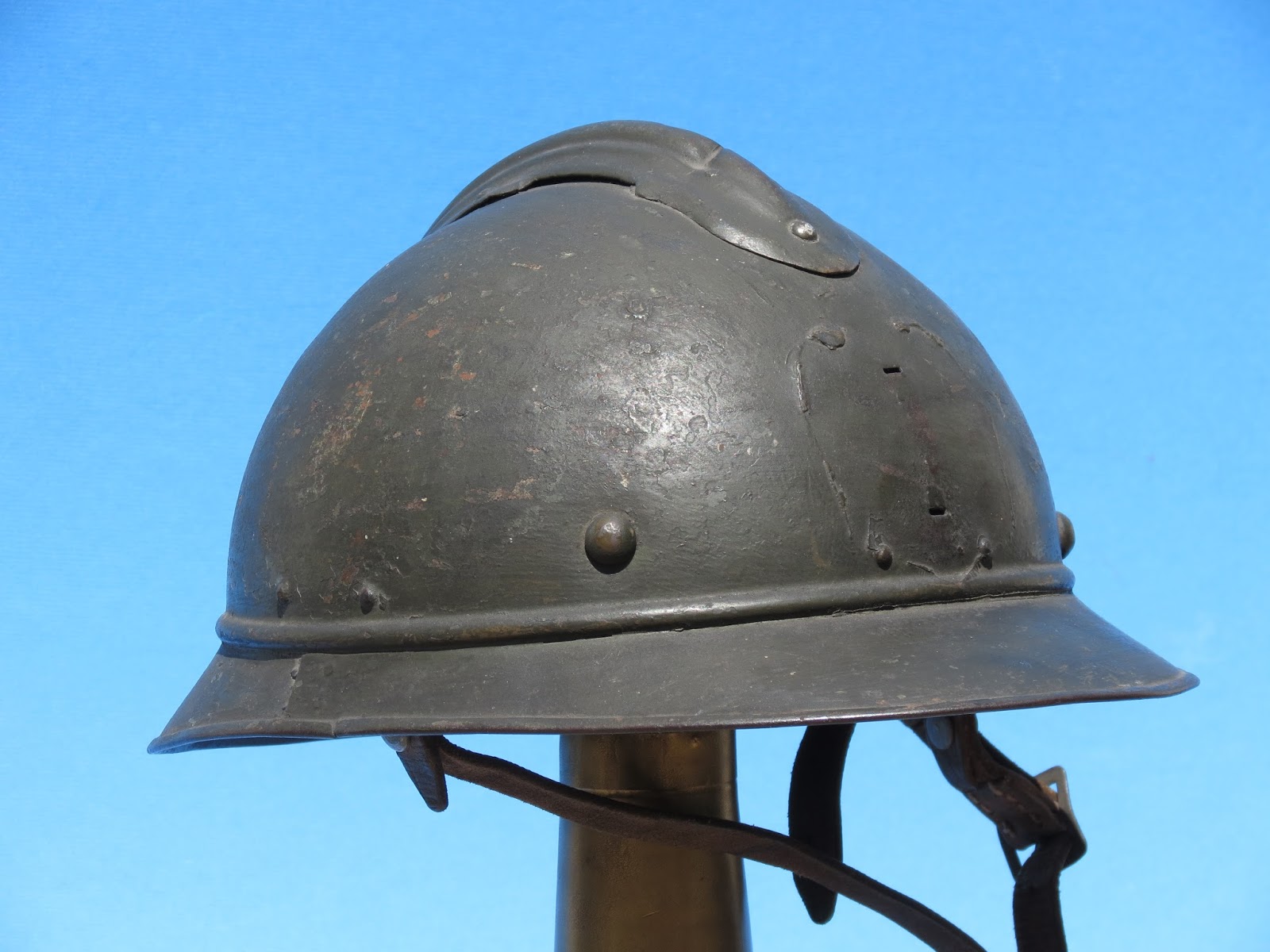


In the newer layer of paint is the outline of the original Serbian helmet insignia.


The crest, one of the features that is emblematic of an Adrian, is more than just decorative...
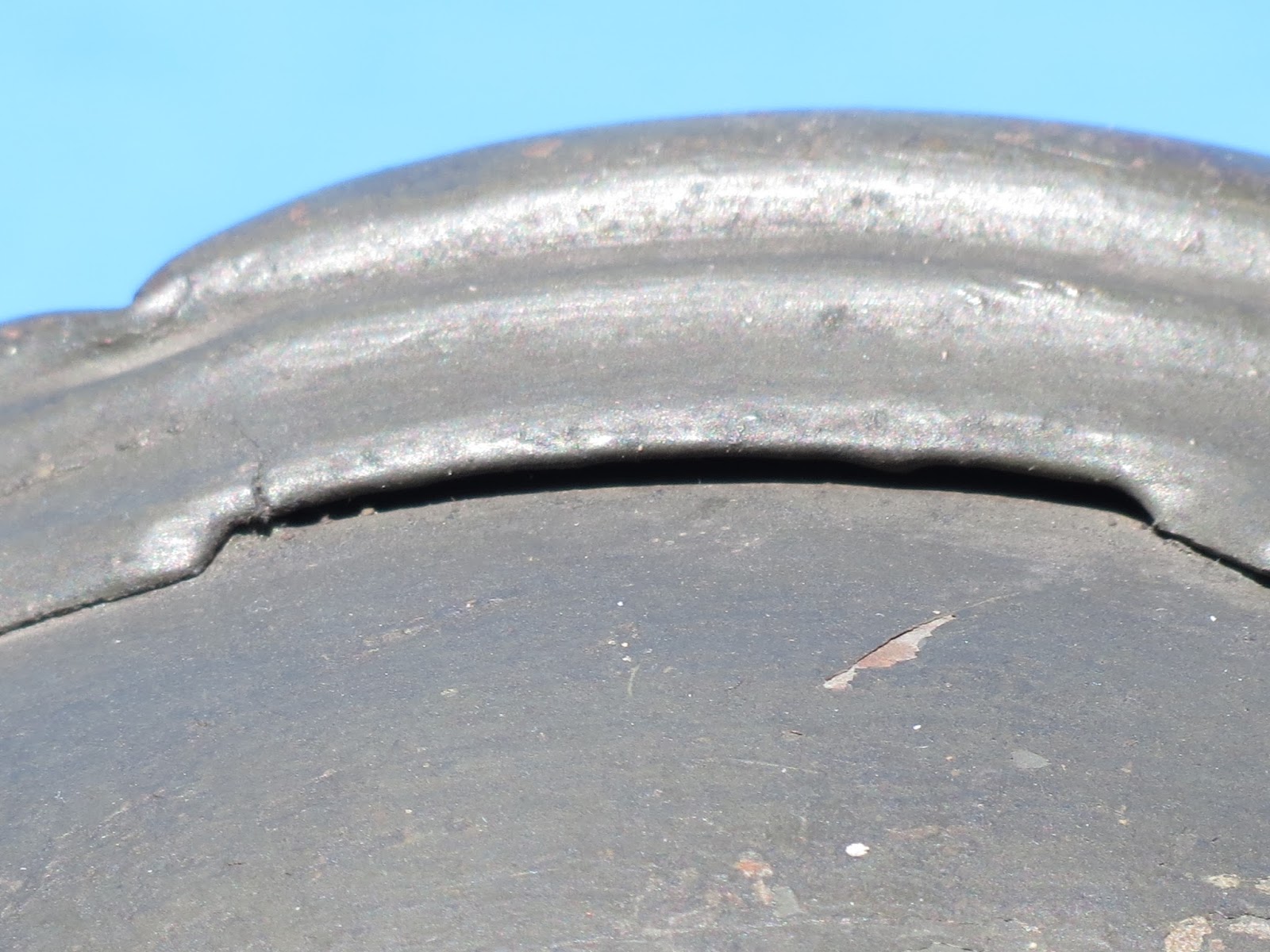

it provides an air-flow through the helmet to provide ventilation and a modicum of comfort for the wearer.  Air enters the slits on each side of the crest...


and exits through this hole in the crown of the shell.


The rivets at the top attest to the variety of liners that this helmet has had.


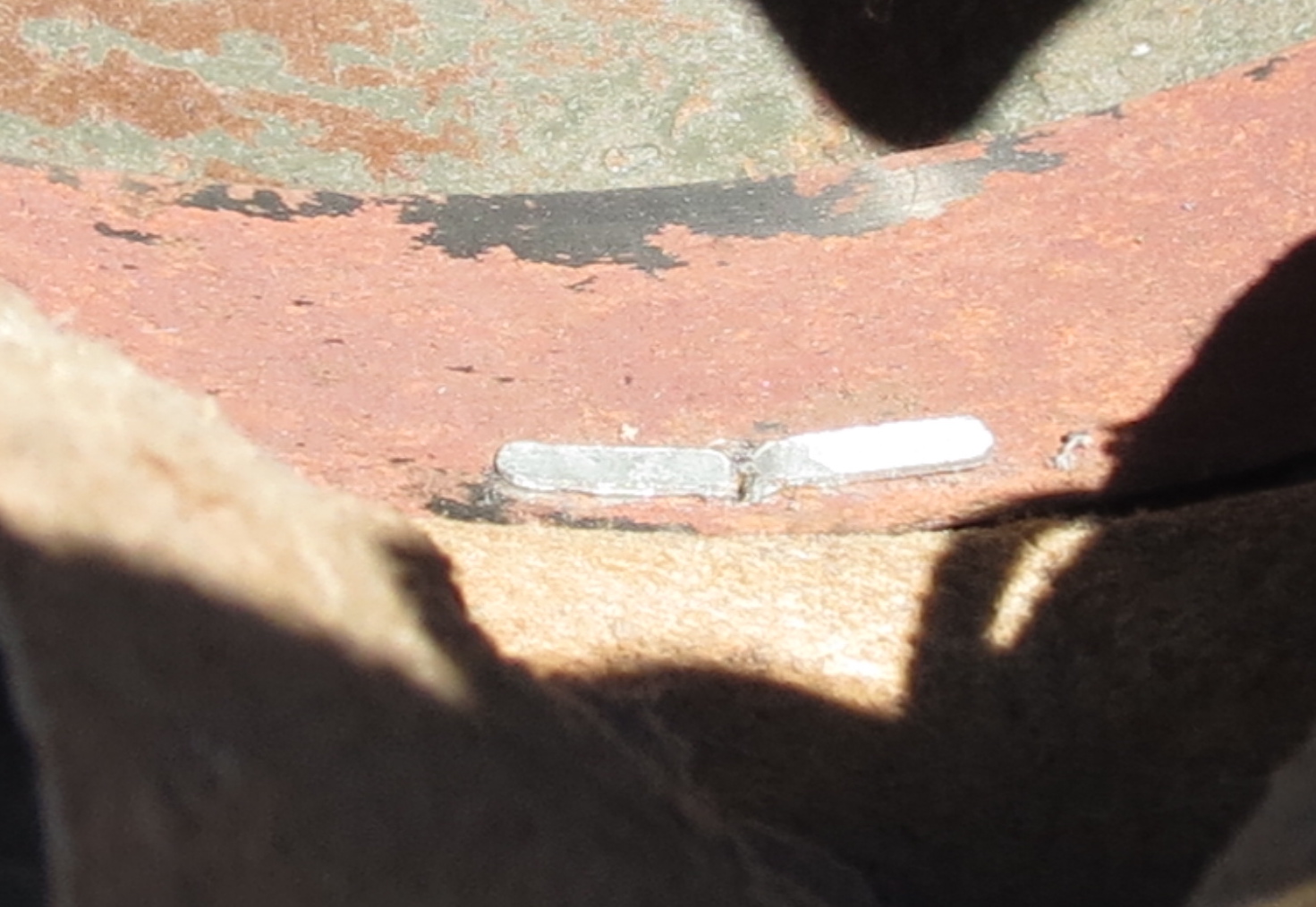
The original WWI liner brackets, as with all Adrians, were welded to the shell, the evidence of the welds are clearly visible. At some point in the history of this helmet what I imagine were similar brackets were riveted in place of the earlier welded ones.


The large split-pins affix the final liner in this helmet - a WWII Bulgarian, when this helmet was reconditioned with new liner. new paint, and a new mission - wartime civil defense.


The smaller split-pins affix the leather to the band, and the larger pins, the band to the shell.

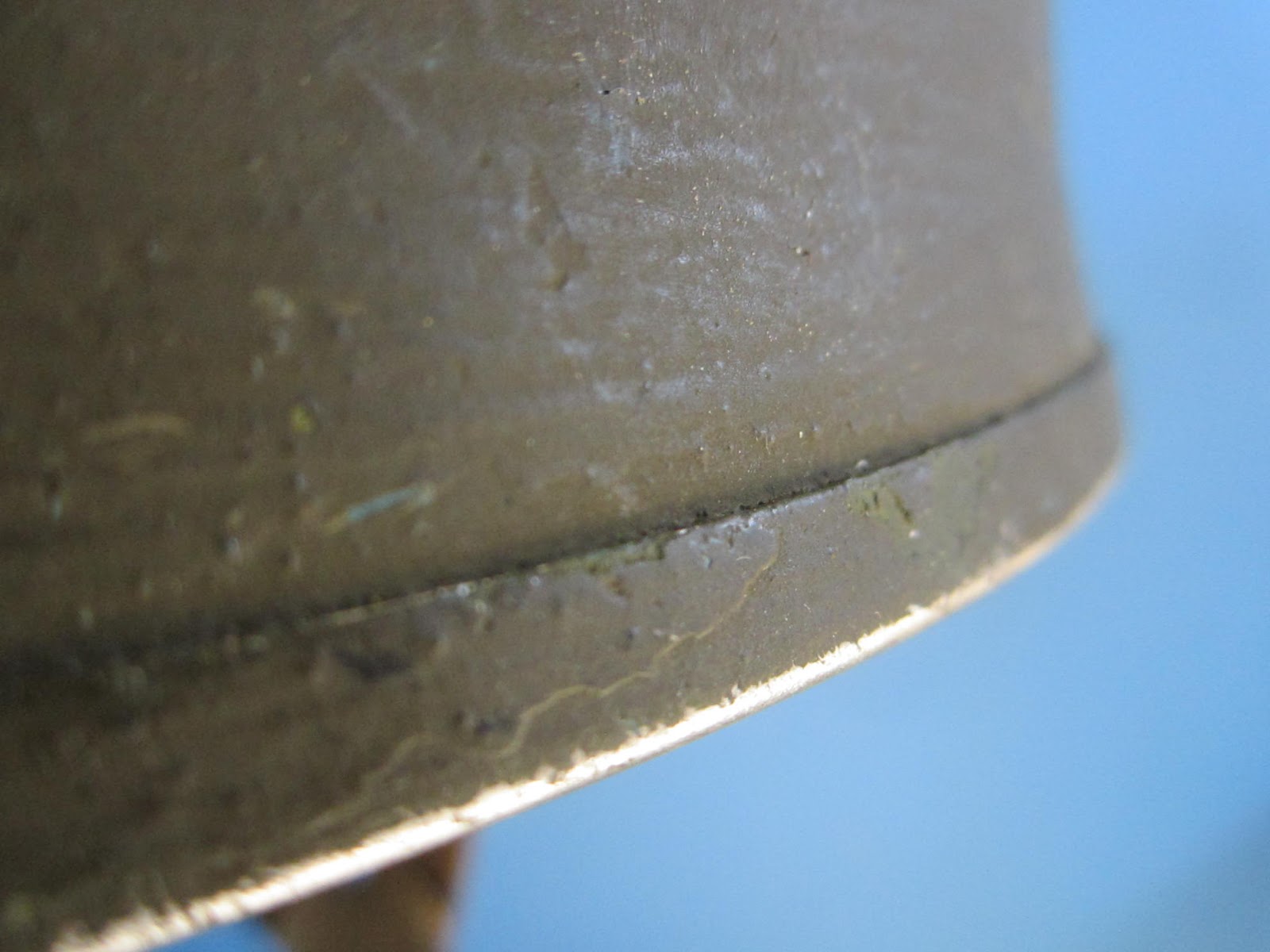
The band was originally finished bright, very little of which remains intact.


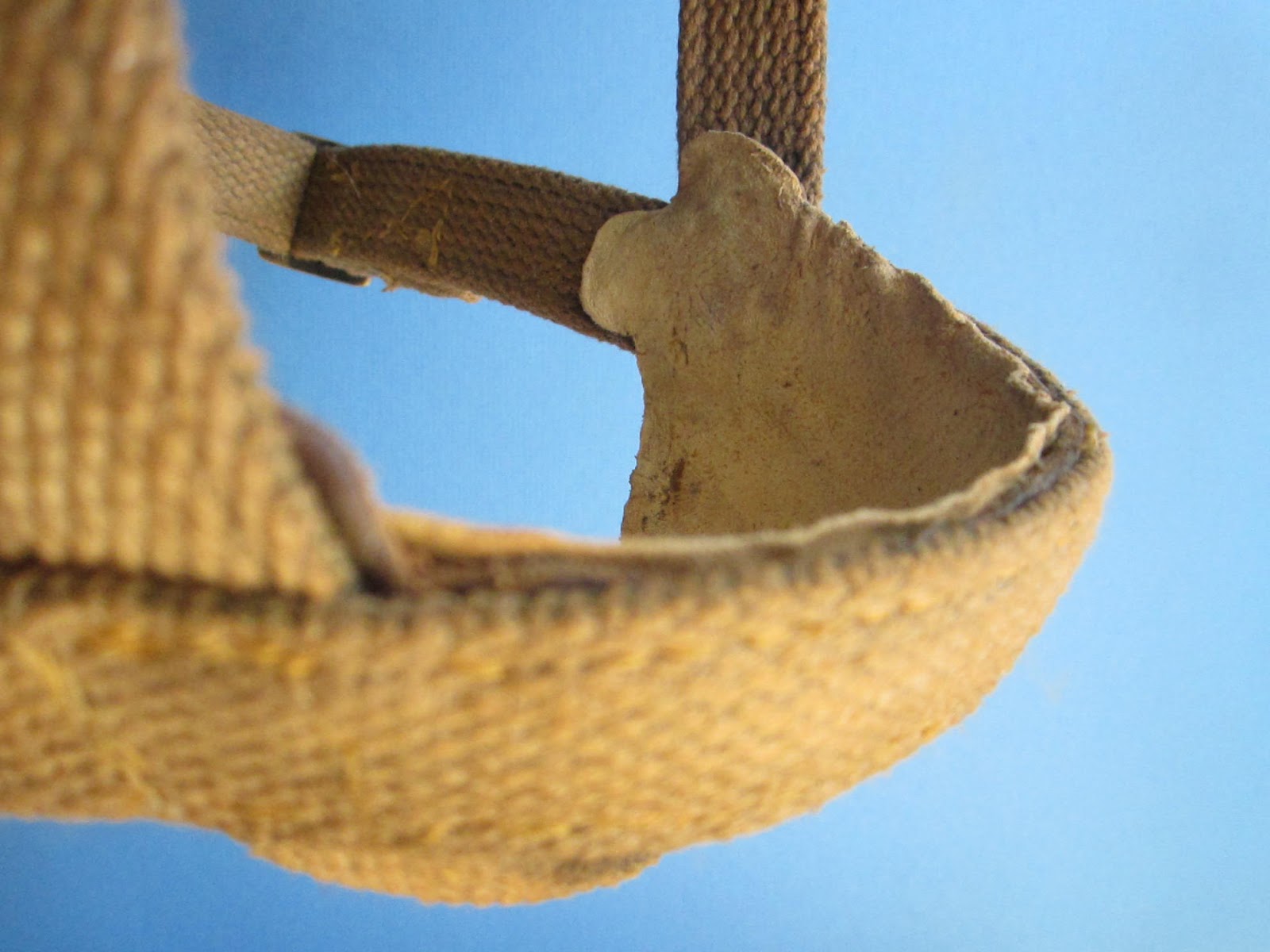
The liner is the type found in the Bulgarian m.36/C of the Second World War.  The chinstrap bears a great similarity to that found in German helmets of WWII, of whom
Bulgaria was an ally.


The liner is of fairly good quality, with the drawstring holes backed by
leather washers.


The sole marking on this helmet is the ink-stamped liner size on the inside of the liner.

And here are some views of the Serbian m.1915 in WWI service.


And what happened to Gavrilo Princip?  he's considered a hero in modern-day Serbia.


It's a heart-warming story of "local boy makes good".  All's well that ends well, I guess


See you next time with another cool helmet from the collection.

Mannie

Wednesday, May 18, 2016

The Doughboys of Harvey Dunn

 
American painter, Harvey Dunn (March 8, 1884 – October 29, 1952) was an American illustrator and painter. His best known work is The Prairie is My Garden. He was primarily known for portraying scenes of the Great Plains, but he also made a name for himself
for his images of the Great War.
 
Do click for larger images, you'll be glad that you did.


A recurring theme for Dunn is the depiction of American soldiers
 fighting through ruined towns.


These doughboys are advancing across a no-man's-land illuminated by flares.

 
 This work is entitled The Machinegunner


American soldiers in rubber knee-boots perhaps returning from the trenches to a rear-area.


German prisoners as litter-bearers for wounded Americans returning from the front lines.


A Renault tank supports an advance through the wire.


A doughboy fighting through the wire of no-man's-land.


American artillerymen night-firing a 75mm field gun.


Wounded and stunned soldiers after the fight.


An advance through a ruined village.


Dunn's paintings and illustrations provide vivid documentation of American combat that he observed during the First World War


These army trucks trundling along have the look of covered wagons rolling across the American landscape...


not surprising, considering Dunn is best known for his painting The Prairie is My Garden.
(please do click to enlarge)


Dunn died in 1952 at the age of sixty-eight but left a memorable record of the American effort during the Great War.

Friday, May 6, 2016

United Kingdom airborne forces mk.II combat helmet


Members of the British 16th Parachute Brigade during "Operation Musketeer", Suez, 1956.


The Luftwaffe was an early entrant to the airborne realm with their first operation against Denmark in April 1940.  It wasn't until October of 1941, a year and a half later that the British airborne arm was operational.
The design of the mk.II was clearly influenced of the German Fallschirmjäger helmet.


The mk.II airborne helmet was introduced in late 1942. 
Made of manganese steel it weighed just over three pounds.


 Ovoid in shape, it came in two sizes.


The mk.II shell was repurposed as a dispatch rider's helmet, and armored vehicle crewman's helmet, and was utilized by the Royal Navy well into the 1980s. 


 The three-point chinstrap provided a great deal of stability though it did not allow for a particularly quick release or wide range of adjustment of the chin cup.


 The rim is finished with a folded, non-magnetic strip.


This shell was produced by the British firm - Briggs Motor Bodies
and was manufactured in 1953.


 The ovoid shape is apparent from above.


 Thick sponge rubber provides a firm cushion between the shell and the wearer's head.


Anyone familiar with the US M1 helmet recognizes the Riddell-style suspension.  This simple method of adjustment could make the shell sit higher or lower on the head.


 The leather headband is of high quality, and in this example, manufactured by the
 London firm of Christy & Co. Ltd in 1953.


The liner, and chinstrap bails are attached by three screws.  Also visible is the rough, non-reflective, finish of the shell.


The bails are quite robust, as is the webbing of the chinstrap.


 Square brass ferrules are riveted to the ends of the straps.


 The intersecting web straps encompass a brown-dyed chin cup worn rough side in.


The sponge-rubber shock absorber is about an inch thick.


British paratroopers operating in the Suez, 1956.


The mk.II paratrooper helmet was also used by Israeli forces.


A British paratrooper of the Second World War.


An altogether handsome helmet and a welcome addition to the collection.
 
 
See you next time with another cool helmet!
 
Mannie