
In 1948 the fledgling State of Israel was a hodge-podge of military materiel from other nations.

1948 Haganah soldiers during the War of Independence wearing
a mix of British Mk I and Mk III ("turtle shell") helmets.

Israeli soldiers, all wearing the British Mk II helmet, at the
Wailing Wall during the Six-Day War of 1967.
After decades of reliance upon other nations' surplus to meet their helmet needs, Israel in the 1970s began producing its own version of the American M1 helmet. Not merely an import of the American M1 but a home-grown clone liner, chinstrap, and all.
Traditionally the State of Israel has, for better or worse, been so closely linked to the United States that wags frequently refer to it as "the 51st state". It would figure then that the front-line helmet of Israel for nearly two decades was a clone of the venerable US M1. This post takes the time to do a side-by-side comparison of the two to explore similarities as well as subtle differences.
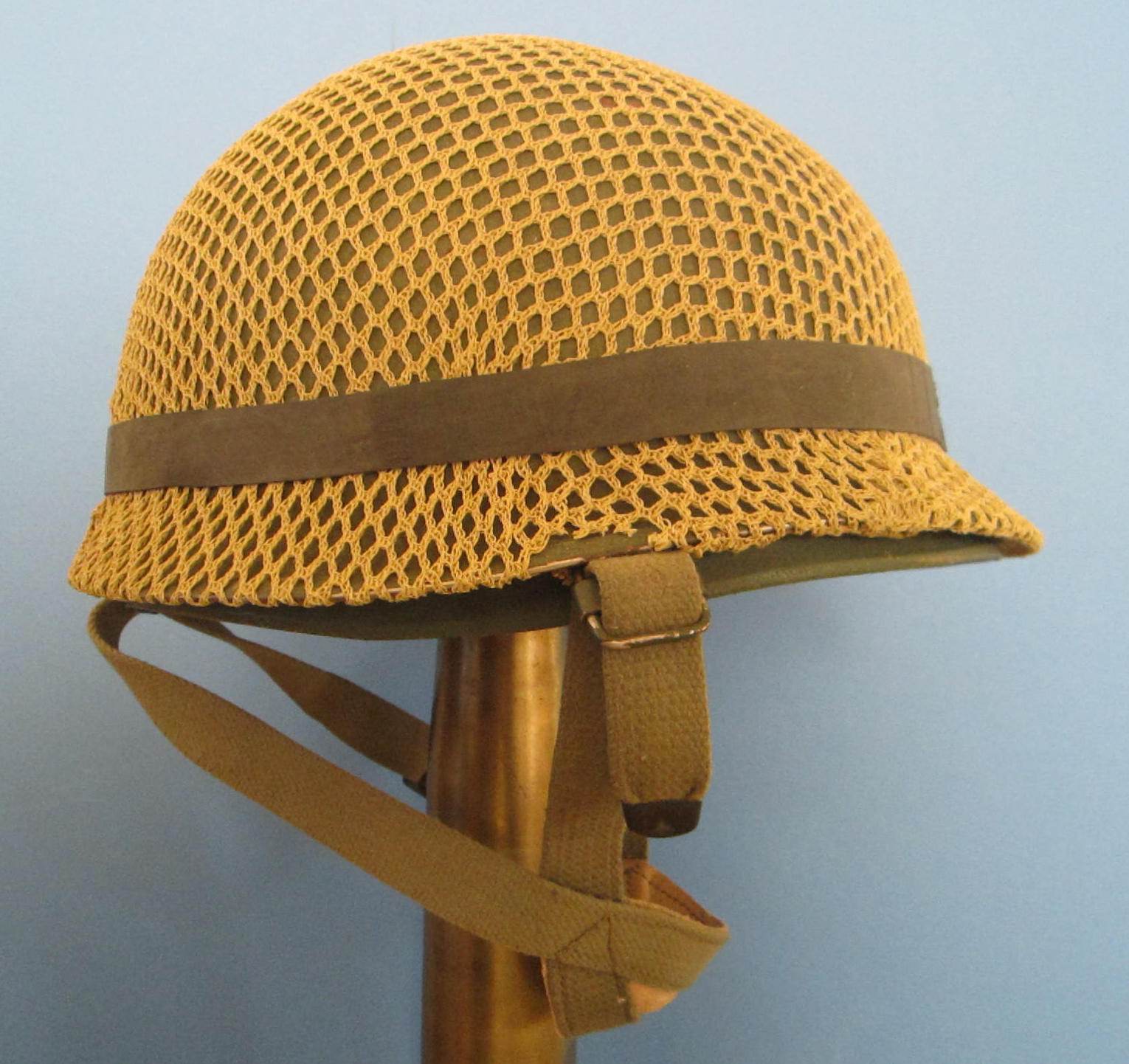
From all angles...
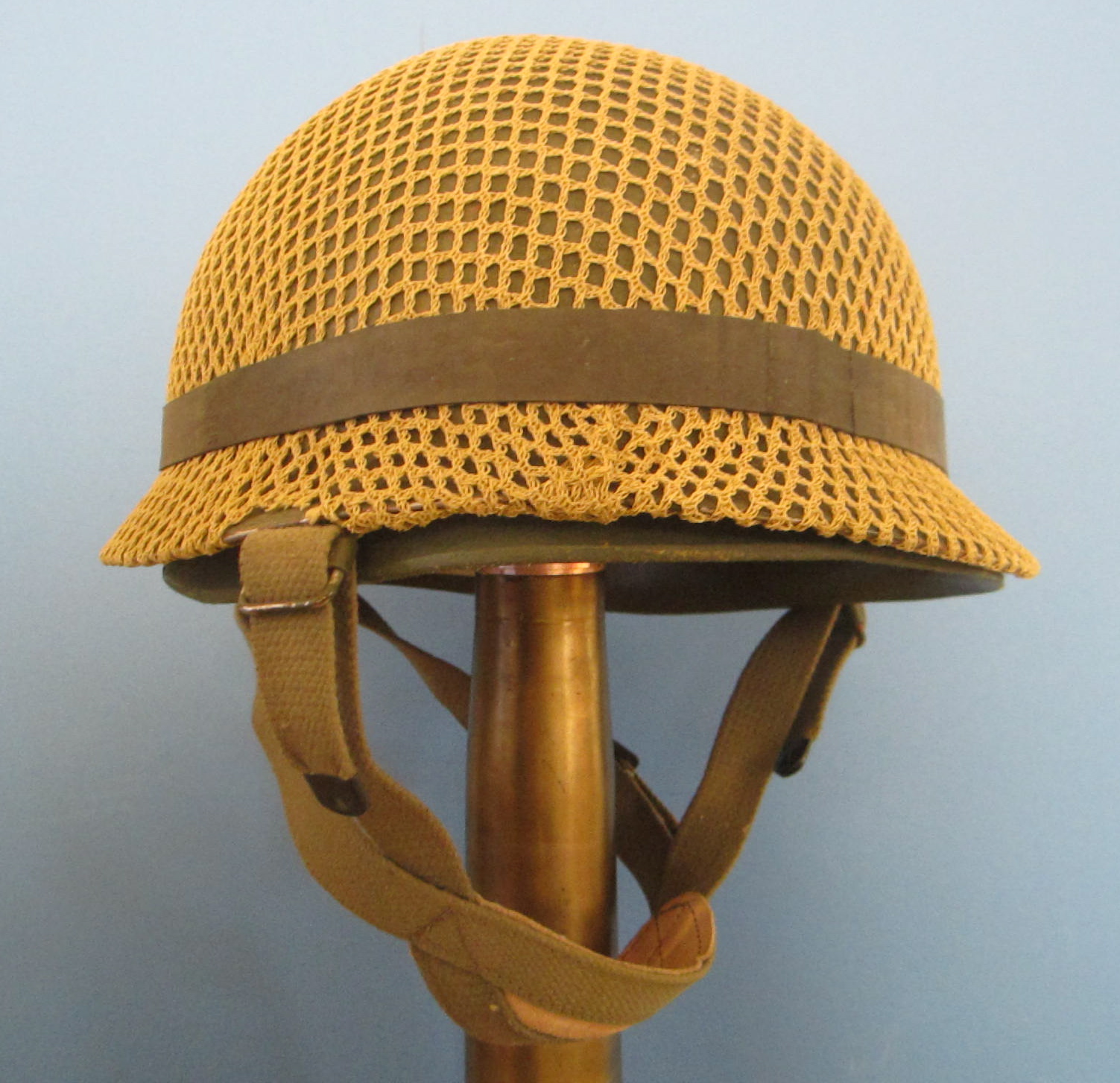
save for the three-point chinstrap...


it's a dead-ringer for the US "steel pot".


To my eye though the the flare of the skirt seems more pronounced that the US M1 so...

I did a side-by-side comparison and the difference is quite evident; Israeli on the left,
American on the Right.


The shell also appears to be slightly larger than the US M1


One thing that really puzzles me about the three-point chinstrap is that there is no quick way to release it. The webbing has to be threaded or unthreaded from the buckles. Either I'm missing something or this isn't a particularly good system.

Imagine having to deal with this every time you needed
to take your helmet off.
There are three adjustment points available
but no practical fastener.


Hebrew script for "army" and, perhaps, the date of manufacture.

This marking, in ink, is printed on the inside of the dome.

Though the buckle is unique it is fastened to the helmet with a bracket very similar to the US M1.

Embossed in the liner is, again, the character for "army" and in the dome of the liner...

is the logo of the manufacturer.
Tama Plastics is an Israeli company that now specializes in
plastic products related to agriculture.

No surprise here, "A" washers typical to an M1 liner.

The helmet band clips are also identical to its American cousin.

As with the US M1 the sweatband is adjustable at the rear.

Comparison with the US M1 liner (on right) reveals fewer rivets, a shorter visor,
and no flare around the rim

The plastic Israeli liner (left) is also considerably thicker that the fiberglass American model.

Typically, camouflage nets were worn with the Israeli M1 as seen here during the Six-Day war.

So there's my look at the Israeli M1 clone.
Stop by again as I mine the collection for
another cool helmet to explore.
In the words of former Israeli defense minister Moshe Dayan...

"I'll keep an eye out for you"


