Thursday, April 30, 2015

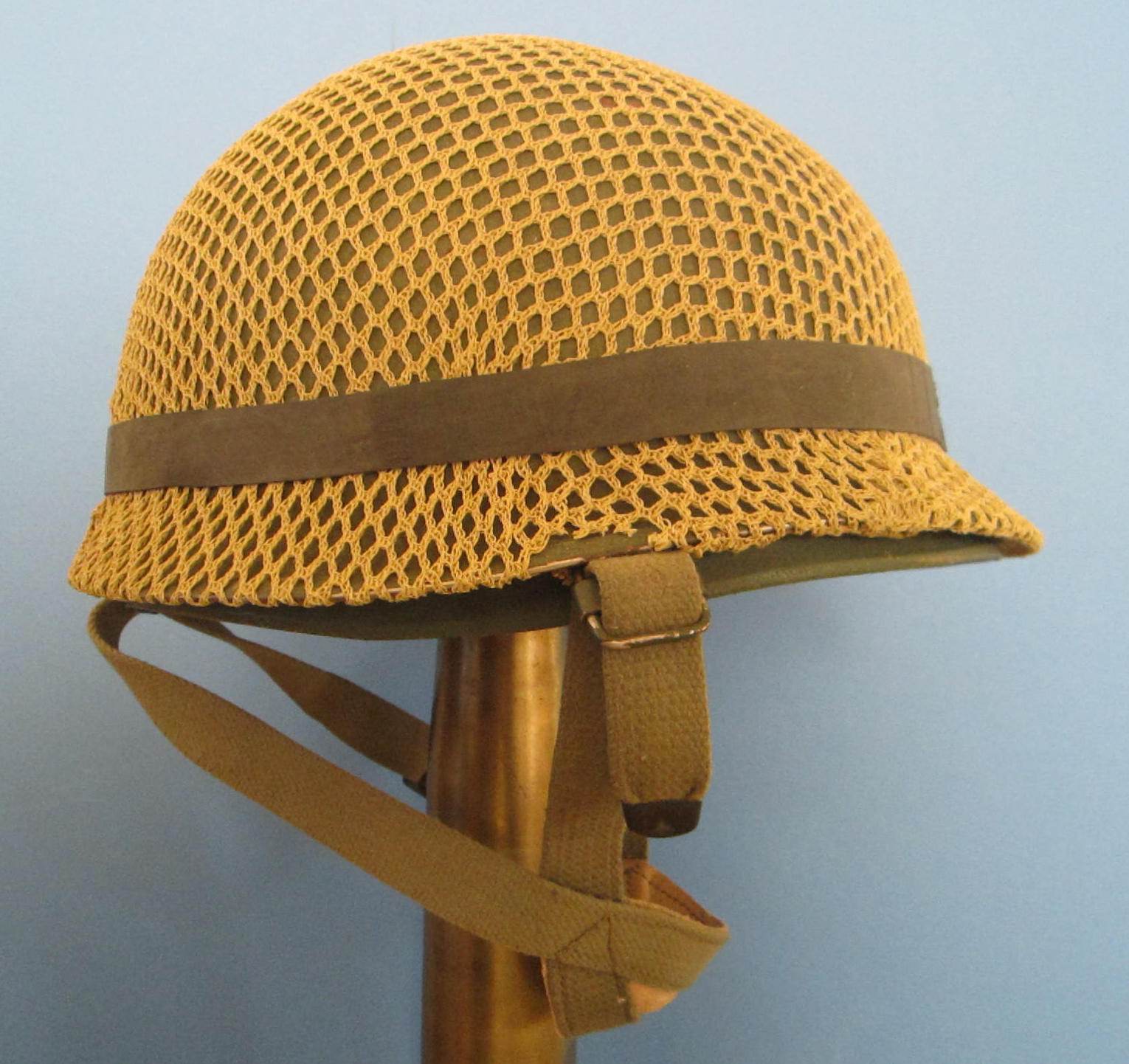
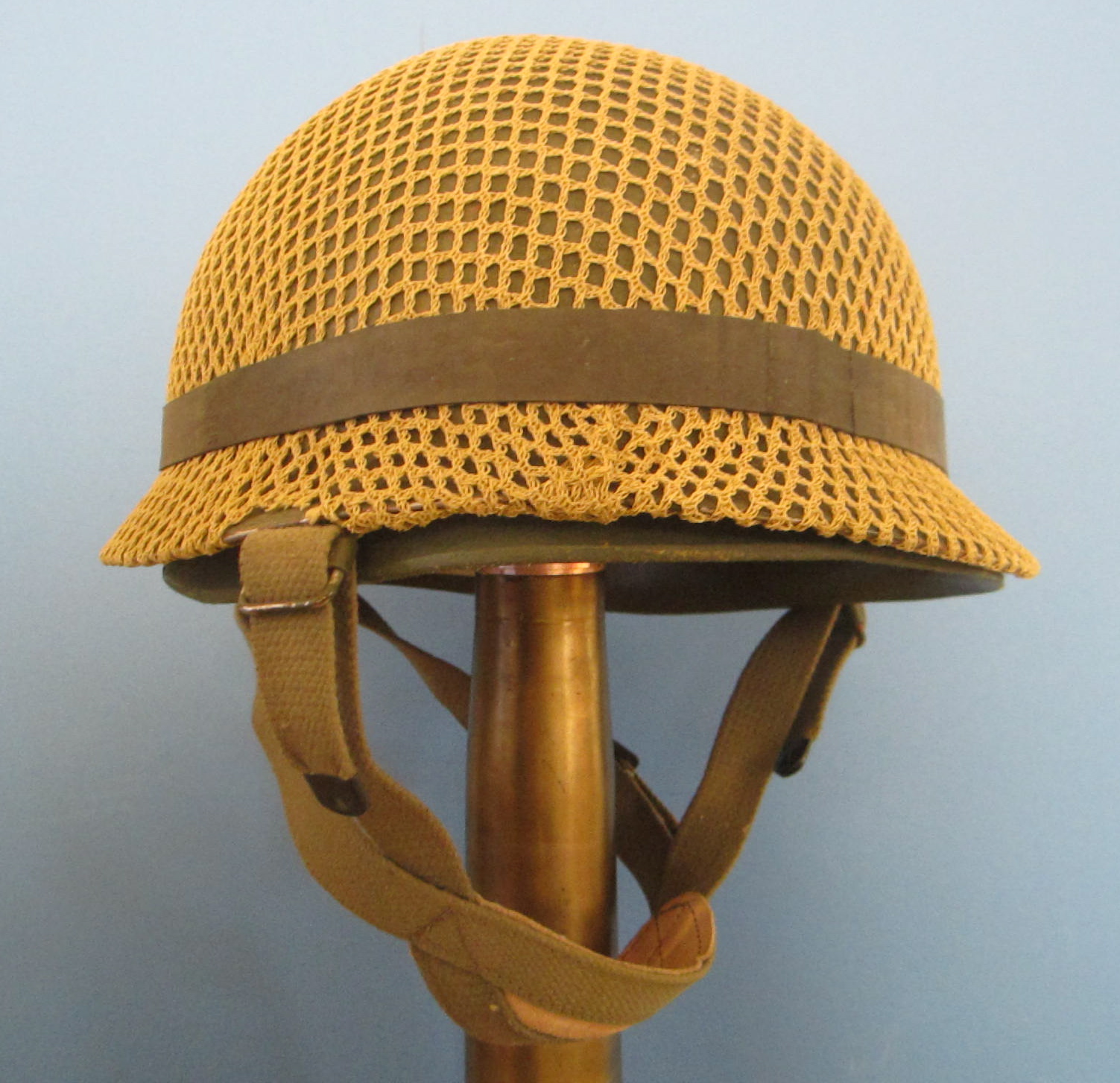
Yugoslav/Serbian Ne 44 combat helmet

This just in: It's always gratifying when I get comments to my blog, and it is particularly satisfying when readers send me corrections and additional information:  I received this from "Srba"  today:

Hey Mannie! A few things about this helmet. The sticker is not the Air Force but Army; AF insignia was different. The sticker is technically not "Serbian" but of the Federal Republic of Yugoslavia (FRY), that is what was left of the country post-1992 (only Serbia and Montenegro); so the helmet was used by FRY army. Last but not least, the sweatband should not be attached to the nape strap, but to the suspension webbing

Thanks srba for helping me out, this is an advantage that blogs have over books - a blog can be continuously edited and updated in real time.


Josip Broz Tito and the breakup of Yugoslavia.  Its all so very complicated.


This is Tito, Yugoslav partisan, unifier of his country, and the great thorn in the side of Joseph Stalin.


This is Tito Puente - the mambo king.  He has nothing to do with the story but is always worth mentioning and watching.


This was Yugoslavia under Tito...

 This is what the region looks like today...


here's an equation to explain what happened...


Simple, huh?
 
 
More straightforward and way easier to understand is the Ne44 steel helmet.
 
 
The Ne44 in action:


My Serbian version of this helmet is designated the M59.

 
 Weighing in at 2.6 lbs (1200 g) this sage green beauty has been soldiering since 1952, first with Tito's forces and then, after the breakup of Yugoslavia, with those of Serbia and Croatia.


Unlike this Serbian version, the Yugoslav model had the red star insignia on the front.


 A Yugoslav Air Force adhesive-backed vinyl insignia is affixed to the front. As seen the vinyl peels and bubbles and isn't particularly impressive - look at the Chinese composite
paratrooper helmet insignia by way of contrast.
 
 
After the breakup of Yugoslavia and the tragic civil wars that followed the Ne 44/M59
was used by all sides.


 From the rear the helmet has a distinctive bell shape.
 
 
 the Ne 44/M59 has a profile
reminiscent of the Spanish m. 38


The liner is a near dead-ringer of the US M1 helmet liner, with the Riddell suspension system.


Even the sweatband clips are identical.


The primary difference from the M1 system is the spot-welded washers that affix
 the suspension to the shell.


 Another slight difference from the M1 is the adjustable nape strap.


The bail for the chinstrap is also a copy of the M1...


 as is the adjustment buckle of the chinstrap.


 The strap is marked as is the shell.
 
 
Unusual for helmets, these have serial numbers.


An altogether handsome helmet that I'm happy to have in the collection.  See you next time.

Friday, March 27, 2015

Hungarian/Finnish m.35-38 combat helmet part two, and some thoughts on helmet collecting

 This is the second Hungarian 35-38 I've collected and I've said pretty much everything I have to say on the subject here. Instead, I'd like to think out loud about helmet collecting in general.
 
 
When I started collecting helmets nearly forty years ago, my main source was militaria shows. specifically a yearly show in Lansing, Michigan.


Every year I'd go to the show with $450 in my pocket and my empty Navy seabag.  At the end of the day I'd have a helmet full of five or six helmets and sometimes money left over.  Good helmets were plentiful and reasonably priced and I was lucky to have picked up my unit marked M1s and WWII German helmets in that golden era.

 
I also frequented gun shows.  helmets were less plentiful, and frequently over-priced, nonetheless I often found a bargain on a helmet I didn't have.

 
 Back in those early days there was also an outfit named Collectors Armory that advertised in gun and military history magazines.  CA sold what they purported to be WWII German helmets for $50. I never saw one of those so I can't speak to their authenticity, but it is worth remembering that other nations used versions of the m.35, m.40, and m.42 German helmets including Finland and Norway and could be easily tricked-out to look like German helmets.
 
 
I did buy three helmets from CA back in the early eighties, and I'm glad I did because back then they were very inexpensive.  Purchases included an m. 40 from Portugal, a Swedish mod. 21-18, and a Japanese m.30-32 which turned out to my delight to be the Siamese version.

 
I've gotten a few helmets at flea markets and antique malls. Antique malls are similar to gun shows in that helmets are a sometime thing and frequently the seller isn't aware of the value and as a result overprices the helmet.  As with gun shows, I have acquired a few helmets at antique malls.


Now ebay has changed everything, for better and for worse.  Ebay makes available to the buyer a world-wide market.  Helmets are numerous and plentiful and the price is whatever the market will bear.  Because the buyer/bidder cannot physically hold or examine the helmet it is a riskier proposition.  On ebay I seldom buy unique or remarkable helmets, viz - a marked divisional M1 helmet or an Adrian with a badge other than the most basic; artillery or infantry - similarly with Belgian Adrians.  But frequently I can acquire some really nice lids through this on-line market place.  My recent posting of a Turkish parade helmet (liner) was an Ebay purchase, as was a really nice Norwegian mk I.  If you know what you're looking for - and looking at - ebay can be a great source for helmets.


The Hungarian helmet pictured in this post I recently purchased from a company called International Military Antiques (IMA).


IMA sells both original and reproduction helmets. I have heard others question the details of some of their claims but overall I believe them to be a trustworthy source for original helmets.


In recent times IMA experienced every collectors dream - a warehouse filled with hundreds of helmets!  IMA purchased an enormous cache of Hungarian and Finnish helmets. 

 
IMA claims the the Finnish models were manufactured in Germany, on original WWII machinery, and often by the same people who made German helmets during the war.  The latter is a pretty brave claim but I have no reason to doubt their assertions.

 
One thing that IMA does that I do have doubts about however is their practice of taking original helmets and reworking or restoring them into something that they never were e.g. Original German mod. 18 shells "refurbished" -tricked out with reproduction camouflage patterns or decals and Hungarian/Finnish helmets with totenkopfs  newly applied to the front.  Unless these "refurbished" helmets are marked as such there is no way that second-generation collectors won't have these items passed off as authentic originals by an unscrupulous intermediate collector. 
Nontheless IMA delivered the goods on this m.35-38.

 
IMA does, during the ordering process, provide the option to "hand select" the desired helmet from their stock.  I paid fifteen dollars for this service, and the condition of the helmet I received either was money poorly spent or a reflection of the tatty condition of the entire horde.

 
I also belong to a few online helmets collectors groups. In this manner I have come to know, and trust, other collectors and have successfully bought helmets from them.  In this manner I have had great confidence in the honesty of the seller and the pedigree of the helmet.


Another source which has produced some nice surprises sort of came out of the blue.  In both instances I was contacted by women who recently lost their husbands and were left with an old helmet he picked up along the way which they were offering for sale.  For a scrupulously fair price on my part I acquired a French mod. 1915 Colonial Troops helmet.  Similarly an old friend, who's husband had recently passed away gave me a box filled with the souvenirs her husband brought home from the war (thanks Norma).  The treasure trove included a German mod. 1940 tropenhelm and both urban and rural police shakos.  What a good friend and what a lucky day indeed!


The bottom line is, do your homework; use good reference materials and ask seasoned collectors.  Belonging to an online helmet group is a wonderful way to become familiar with issues of authenticity and fair pricing. 

 
That's my experience of forty enjoyable years of collecting, and I hope yours are equally satisfying.
 
Happy collecting!


Thursday, March 26, 2015

Israeli M1 combat helmet


 In 1948 the fledgling State of Israel was a hodge-podge of military materiel from other nations.


1948 Haganah soldiers during the War of Independence wearing
 a mix of British Mk I and Mk III ("turtle shell") helmets.


Israeli soldiers, all wearing the British Mk II helmet, at the
Wailing Wall during the Six-Day War of 1967. 

After decades of reliance upon other nations' surplus to meet their helmet needs, Israel in the 1970s began producing its own version of the American M1 helmet.  Not merely an import of the American M1 but a home-grown clone liner, chinstrap, and all.


Traditionally the State of Israel has, for better or worse, been so closely linked to the United States that wags frequently refer to it as "the 51st state". It would figure then that the front-line helmet of Israel for nearly two decades was a clone of the venerable US M1.  This post takes the time to do a side-by-side comparison of the two to explore similarities as well as subtle differences.


From all angles... 


save for the three-point chinstrap...


 it's a dead-ringer for the US "steel pot".


To my eye though the the flare of the skirt seems more pronounced that the US M1 so...


I did a side-by-side comparison and the difference is quite evident; Israeli on the left,
American on the Right.


 The shell also appears to be slightly larger than the US M1


One thing that really puzzles me about the three-point chinstrap is that there is no quick way to release it.  The webbing has to be threaded or unthreaded from the buckles.  Either I'm missing something or this isn't a particularly good system. 


Imagine having to deal with this every time you needed
 to take your helmet off.
 

There are three adjustment points available
but no practical fastener. 


 Hebrew script for "army" and, perhaps, the date of manufacture.


This marking, in ink, is printed on the inside of the dome.


Though the buckle is unique it is fastened to the helmet with a bracket very similar to the US M1.


 Embossed in the liner is, again, the character for "army" and in the dome of the liner...


 is the logo of the manufacturer.
Tama Plastics is an Israeli company that now specializes in
 plastic products related to agriculture. 


 No surprise here, "A" washers typical to an M1 liner.


The helmet band clips are also identical to its American cousin.


 As with the US M1 the sweatband is adjustable at the rear.


Comparison with the US M1 liner (on right) reveals fewer rivets, a shorter visor,
 and no flare around the rim


The plastic Israeli liner (left) is also considerably thicker that the fiberglass American model.


Typically, camouflage nets were worn with the Israeli M1 as seen here during the Six-Day war.


 So there's my look at the Israeli M1 clone. 
Stop by again as I mine the collection for
another cool helmet to explore.

In the words of former Israeli defense minister Moshe Dayan...


"I'll keep an eye out for you"