Wednesday, August 10, 2016

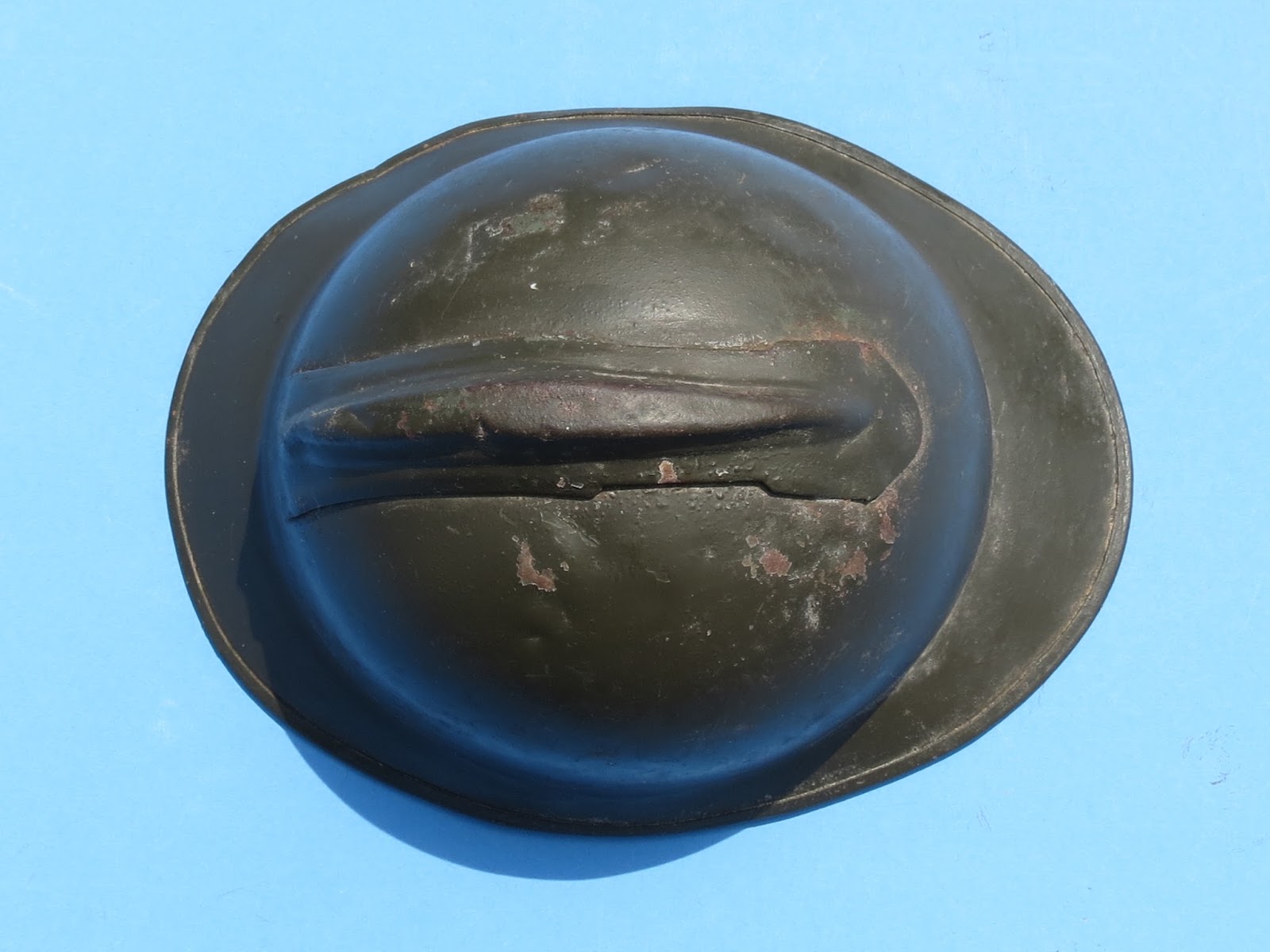
Italy m.15/16 combat helmet (part two)


A Roman soldier walks into a bar, holds up two fingers and says: "Five beers please".

That's my Italian joke.


And here we have jolly Italians during the Great War wearing the m.15/16 steel helmet.


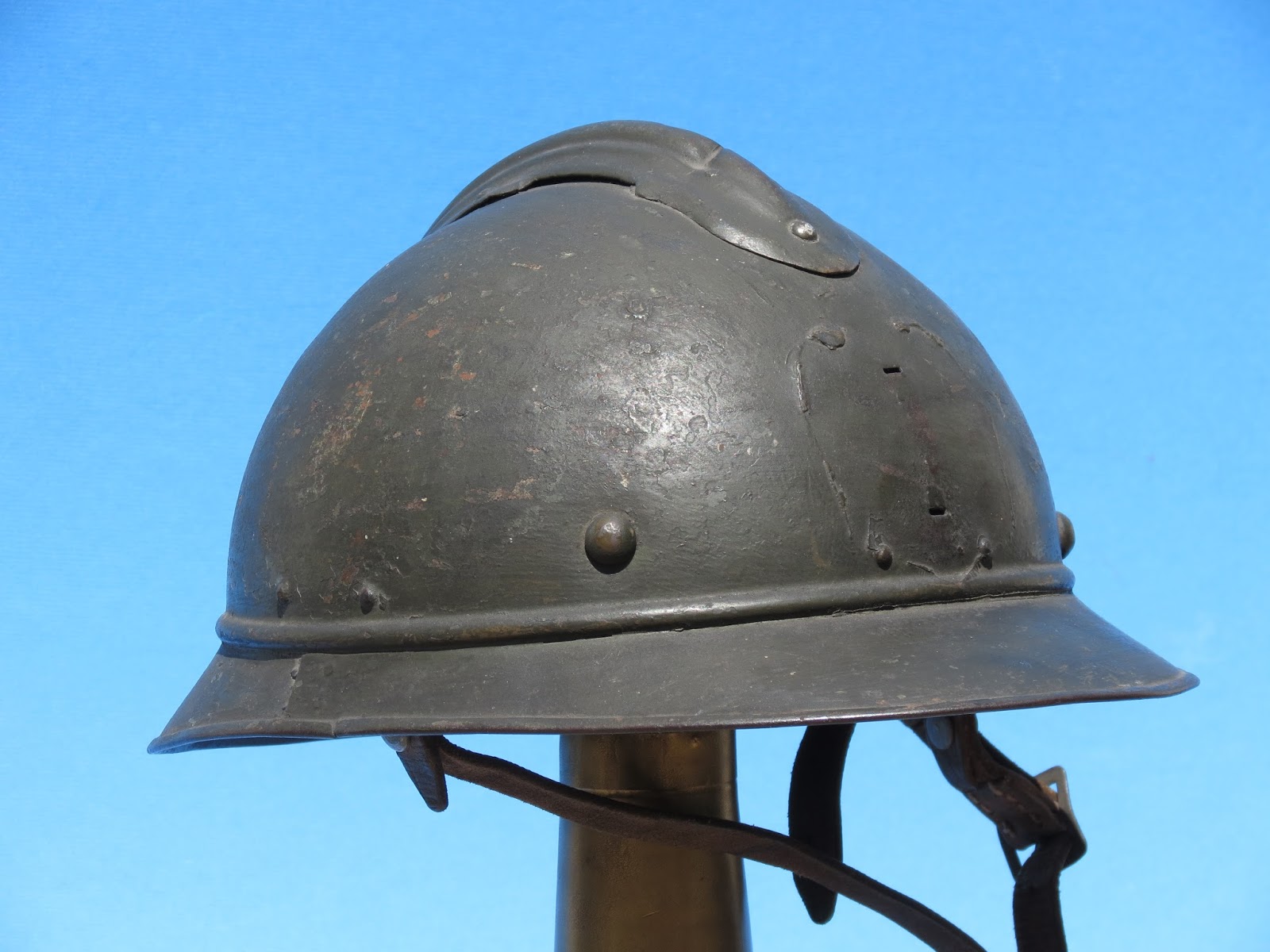
Obviously influenced by the French Adrian helmet, this attractive Italian manufactured gem, also known as the Lippmann helmet, simplified the construction process and eliminated many of the weaknesses of it's French progenitor. The Italian soldier of 1915 - 1916 had the next step in state-of-the-art helmet design.


This elegant improvement of the French Adrian design included a two-piece construction rather than the four-pieces of its French counterpart. Fewer pieces meant fewer points of failure when impacted by debris, fragments, or shrapnel.


The steel of the m.15/16 was slightly thicker than it's French cousin, providing 
slightly better ballistic characteristics.


I've often read that the crest on the Adrian-style helmet was to deflect saber blows.  I don't believe this for a moment.  The helmet design was based upon the French fireman's helmet. A fireman has many things to worry about, but a crazed bystander wielding a sword is seldom one of them.


This model did come in three sizes, the largest of which weighed 1.6 pounds.


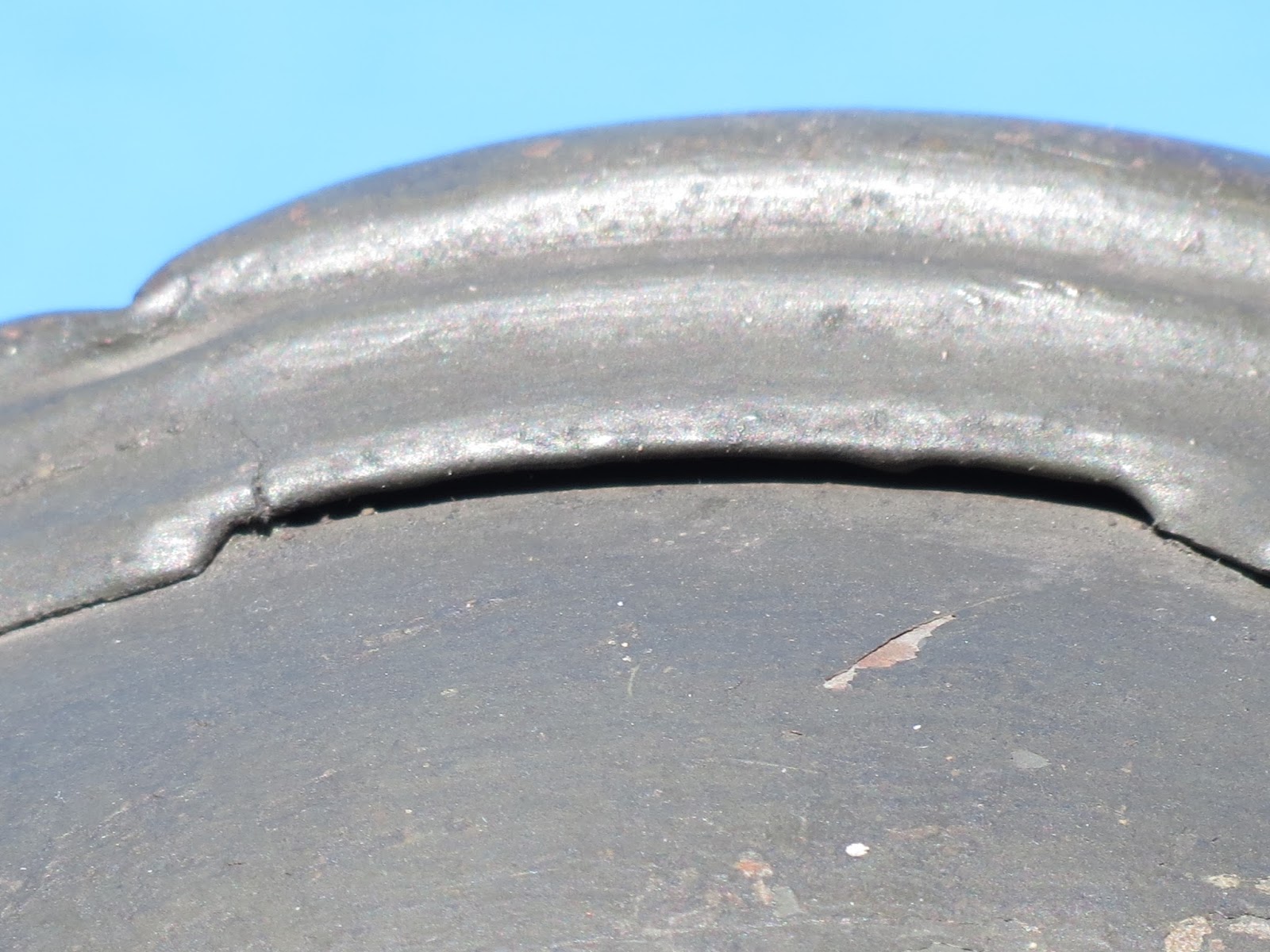
Another improvement to the integrity of this helmet was the elimination of rivets. The French Adrian helmet was riveted together, each rivet providing a weak point. Note that the ventilator crest of this little Italian job is spot-welded, all rivets are eliminated on this helmet, giving it improved structural integrity over its French cousin.


As with the French model, slits in the base of the crest communicate an opening in the crown of the shell...


which allows for ventilation.


The rim has a folded edge.


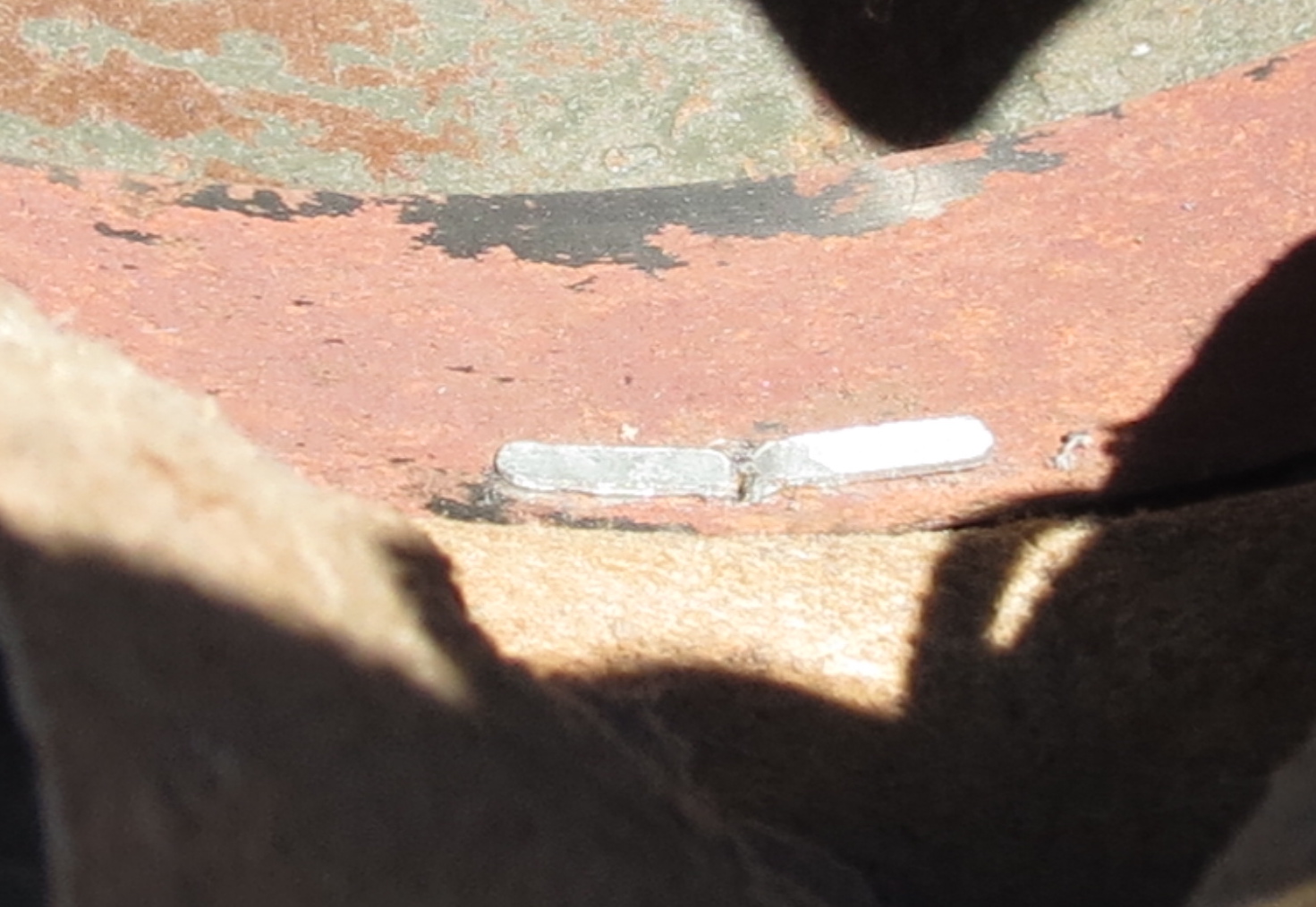
There is no liner, though two of the corrugated spacers remain.  These shallow pieces of rippled metal are the only spacing between the shell and the skull of the wearer.  Compared to the German m.16 and the American m1917, this method looks primitive.

And now some photos of the m.15/16 in action.


I see a lot of knives in this picture...


it seems to be a theme.


See you next time with another cool helmet from the collection.

Ciao!

Mannie

Monday, June 20, 2016

Serbia/Bulgaria m.1915 combat helmet


Unintended consequences


It's June 28, 1914 and 19-year-old Serbian Gavrilo Princip made history.  And how.

By killing one of Europe's most insignificant monarchs, Princip plunged the world into a war that cost  thirty-eight million casualties including 25% of the Serbian army.

I bet he didn't see that one coming.

The Serb forces were depleted after the Balkan wars and were sorely under-manned and under-equipped at the outset of the Great War.  Overwhelmed by the Bulgarians, Serb forces were nearly devoured and had to flee into neighboring Albania.

Enormous amounts of Serbian military materiel were captured by the Bulgarians, including French-made Serbian m.1915 helmets.  Those helmets would embark on a long journey which would see them converted into Bulgarian air-defense helmets during World War Two and , eventually, to my helmet gallery.


What keeps this from being a typical French-produced m.1915 Adrian helmet is the addition of the additional split pins and rivets.


In the newer layer of paint is the outline of the original Serbian helmet insignia.


The crest, one of the features that is emblematic of an Adrian, is more than just decorative...


it provides an air-flow through the helmet to provide ventilation and a modicum of comfort for the wearer.  Air enters the slits on each side of the crest...


and exits through this hole in the crown of the shell.


The rivets at the top attest to the variety of liners that this helmet has had.


The original WWI liner brackets, as with all Adrians, were welded to the shell, the evidence of the welds are clearly visible. At some point in the history of this helmet what I imagine were similar brackets were riveted in place of the earlier welded ones.


The large split-pins affix the final liner in this helmet - a WWII Bulgarian, when this helmet was reconditioned with new liner. new paint, and a new mission - wartime civil defense.


The smaller split-pins affix the leather to the band, and the larger pins, the band to the shell.

The band was originally finished bright, very little of which remains intact.


The liner is the type found in the Bulgarian m.36/C of the Second World War.  The chinstrap bears a great similarity to that found in German helmets of WWII, of whom
Bulgaria was an ally.


The liner is of fairly good quality, with the drawstring holes backed by
leather washers.


The sole marking on this helmet is the ink-stamped liner size on the inside of the liner.

And here are some views of the Serbian m.1915 in WWI service.


And what happened to Gavrilo Princip?  he's considered a hero in modern-day Serbia.


It's a heart-warming story of "local boy makes good".  All's well that ends well, I guess


See you next time with another cool helmet from the collection.

Mannie